
Author Archives: caoimheharney
Irish Emigration through the Centuries.

It is often said that Boston is closer to Ireland than Brussels. In many respects Irish people have much more in common with Americans than that of our fellow Europeans. This can be attributed to the mass migration of Irish people to the United States which spans a couple of centuries. Emigration is something that has been a part of Irish history for generations. Emigration from Ireland dates back as far as the 1600’s but records only began to appear in the 1700’s. In 1890 almost 40% of people born in Ireland were living abroad. By the 21st Century almost 80 million people around the world claimed Irish descent. In the United states today over 36 million people claim Irish ancestry.
The proposed thesis will be a thesis by practice accompanied by a radio documentary. The research will look at the historical context of Irish emigrationspecifically to the United States and its role in the decline of rural Ireland. It will consider the effects of emigration on Irish culture in the 21st century by examining the relationship between underdevelopment and underfunding of rural Ireland and the impact that has on emigration. It will also discuss the symbiotic nature of this relationship by discussing the effects of emigration in Ireland and how that has shaped our culture.
1.1 Research questions:
The aim of the proposed thesis is to answer the following research questions:
- Has Ireland been disproportionately impacted by emigration – specifically in Rural areas?
- What, if anything, had a major effect on the emigration in Ireland?
- Has the way that Irish Immigrants are perceived in America changed over the decades?
1.2 Historical Context of Irish Emigration:
From the mid 1600’s emigration was a popular choice for the Irish.Most people associate emigration with the famine but over 1.5 million people emigrated from Ireland in the thirty years prior to the famine, predominantly to the United States, Canada and England. In the 18th century those who crossed the Atlantic knew it was forever. It was a migration. They were predominately Scotch Irish Presbyterians, hungry for land. From 1800 to 1845 a million more came, half from the south, as a mass exodus of Catholics fleeing repression and poverty got under way. (O’Cleary,1995)
However, by the time the 1840’s came Ireland was very poverty stricken. At the time the population of the country was rising and the dependence on farming was increasing, at the same time the harvests failed. Ireland experienced the great famine between 1845 and 1850.
The main causes for the Irish famine were the rise in the population, the dependence on the potato, the blight and the subdivision of land. The population of Ireland grew from 6.2 million to 8.2 million in the period between 1821 and 1841. Some areas in the west of the country such as Connaught were more heavily populated than others. As the population began to increase people became poorer, bigger families meant more mouths to feed. The worst effected were the labourer’s and small farmers that had less than five acres of land. The potato was the staple food for over four million people in Ireland so when the blight hit many people were left to starve as the potato was the only thing they had to eat.The blight hit Ireland in the autumn of 1845, but it only affected some areas and initially very few people died. The blight returned in 1846, this time the entire crop was destroyed and as a result starvation killed many people. From 1847 to 1852 over 200,000 people emigrated from Ireland each year. (Lucey, 2018)
2. Evidence of Research:
Emigration has undoubtedly shaped the Irish people and its culture. In an article for the Irish Times (Gaffney 1995)discusses Irish emigration in the 20th century. The article describes the opinions of sociologist Liam Ryan who says that discussing emigration “is virtually the same as discussing Ireland itself, since there is hardly a single political, social, economic, intellectual or religious problem which has not been directly or indirectly influenced by emigration.”In every country on every continent for which figures, or estimates exist, the populations of other countries were soaring. Even the slowest-growing countries experienced more than a doubling of their populations over the 19th and 20th centuries. (O’Brien, 2012.) However, in Ireland that was not the case. O’Brien writes that Ireland “is the only country – without exception – to have experienced depopulation” within these centuries. This incomparable decline continued for over one hundred years, from the Great Famine to the 1960s. Many factors contributed to the decline in population. None did so more than emigration.
An article by (Mac Éinrí, 2017) defined emigration in Ireland as “a tragedy -a loss for the emigrant and to the community left behind.” The tradition of the American Wake captured the sense of permanence and departure from Ireland. It became very popular in the mid 1840’s during the famine and a time of mass migration.Migration to the United States has usually been more favourable than emigrating to England. It held with it more prestige and opportunity than moving to England to “beg for bread”. One article (O, Clery,1995) told ‘”America was the land of opportunity but only if you worked for it,” said Joe Cunningham (80), who redefined himself as so many Irish do in the New World eventually becoming president of the Civil Service Employees’ Union. But of one thing he was certain; that he would be treated with more respect in the United States than in England, where he had worked during the second World War.In England you were a Paddy.’
There has always been a greater sense of commitment among the Irish who made the journey to the land of liberty and opportunity. O’Clery’s article details an interview with Niall O’ Dowd, publisher of the Irish Voice, New York, who said at one time as little as 25 Pounds could get you to England, but it cost maybe 1,000 Pounds to cross over the Atlantic to the united states to the United States. “You really had to work. And you might never get home again.”
These days emigration is sometimes viewed as a thing of the past but that is not the case. There is still a disproportionate number of young adults emigrating. Following the economic crash of 2008/2009, a record number of young people left Ireland in search of work and opportunity. In an article written by (O’Brien, 2012) he tells of “the shock to the economy and employment over the past four years” he argues that the shock to the economy is “incomparably more severe than that of the 1980s”, when emigration was last prevalent. The economic catastrophe has resulted in “one in seven jobs disappearing.” The economic crash of the 1980’s had a devastating impact on Ireland, mass unemployment and little prospects of work meant mass migration. Gaffney (1995) wrote in The Irish Times that in 1988 the number leaving the state (approximately 45,000) came close to the number born (54,000).An article by (O’Clery, 1995) states that “Irish immigration tended to come in 30-year cycles and there was always tension among the generations.” If that trend is correct then it was inevitable that there would be migration in the latter end of the noughties, with the last mass wave of migration being during the economic downturn of the mid-eighties.
However, the extent to which young Irish people are emigrating in the 21st century has been exasperated by economic downturn of 2008/2009. Ciara Kenny wrote in an article in The Irish Times in 2013 that, “Since the onset of the economic crisis in 2008, more than 200,000 Irish people have moved abroad. They are brothers, sisters, sons and daughters, highly qualified graduates, out-of-work labourers, farmers or IT technicians.”The question remains whether the young people of Ireland emigrate because they want to or because they need to. Whether they leave to fulfil a dream of travelling or out necessity and to find work. An article by (O’Clery 1995) states that “Irish immigration tended to come in 30-year cycles and there was always tension among the generations.” If that trend is correct then it was inevitable that there would be migration in the latter end of the noughties, with the last mass wave of migration being during the economic downturn of the mid-eighties.
On close examination of a comprehensive survey, (Kenny 2013) found that “the households where families had been left behind, nine in 10 said emigration was negative and had a bad effect on the family, the community, and Ireland as a whole. Many young Irish feel dismay at how they are treated after they emigrate, with many expressing “a sense of anger” towards the governments “lack of regard” for the. Half of those that took part in the survey said the “Government is not providing adequate support for emigrants.” Eight in 10 disagree that the Government is “doing its best to tackle the causes of emigration.”
One of the plights of being away from home is missing out on milestones with family and friends. This was also cited by Kenny in her article. “Being absent for events such as weddings, births and deaths is a source of regret for many, while a “surprisingly large” number of interviewees mentioned missing Irish humour, the “banter” and the “craic”. (Kenny 2013). Kenny details the sentiments of Senior research and policy officerMarie-Claire McAleerof theNational Youth Council of Ireland; she said the high level of emigration was “disappointing but not unexpected”. Ms McAleer called for action “The emigration figures further underline the need for immediate and stronger Government action to stem the flow of young people leaving the country in the first instance.” Her views correlate with the parents of emigrants who felt that their lives and that of the local community was being decimated by emigration. The article detailed strong worded advice for government who “need to provide greater support and advice to young people who are left with little option but to emigrate.” The youth council has called for the Government to assign a minister with responsibility for emigration and Irish abroad. (Kenny,2013)
Kenny writes above about greater support being afforded to young emigrants. This opinion runs parallel to the findings of (Mac Éinrí2017) that said while“60pc of the population of Ireland now lives in urban or suburban surroundings, a disproportionate number of today’s emigrants are leaving rural Ireland.” This shows that although Ireland has progressed some things have not changed, people in rural areas are disproportionately impacted by emigration. “Since 2008 a quarter of all rural families have lost at least one member to emigration and for their loved ones left behind, the impact of emigration is still dramatic and largely negative.” (Mac Éinrí 2017).
Gaffney (1995) argues that emigration is defence mechanism for the Irish rather than a necessity. Gaffney states, “That catastrophic loss of trust in Ireland became institutionalised in the Irish psyche as an unconscious woundedness, a loss of confidence. Escape and avoidance became deeply ingrained as our first defence against threat.”
2.1Conclusion:
It is clear from the research outlined above that emigration by enlarge is an integral part of Irish society and part of its culture. Nowadays young people emigrate for reasons other than work, for travel, adventure and new experiences. Despite this, emigration unduly effects rural areas of Ireland. Young people living in rural parts of the country are more likely to have to emigrate to look for work, rather than leaving for travel and adventure. The evidence is clear, rural Ireland is disproportionately impacted by emigration. Rural communities in Ireland continue to suffer due to lack of work and lack of opportunities in the area. This forces the youth to emigrate in search of work and a better standard of life. Nowadays, emigration still haunts rural Ireland“there’s nothing to go home to” is a sentiment that echoes loud and clear.
3. Design of Technical Application:
The intended research approach for the proposed thesis will be structured in conjunction with the literature review in chapter 2. Qualitative research will be necessary to answer the research questions on Irish emigration. This chapter will discuss the benefits of the qualitative methods research with reference to the proposed thesis. It will also examine the methods that will be used and their benefits. The proposed thesis will be a thesis by practice. The chosen method of practice will be a radio documentary due to its suitability to the sensitive subject content. A brief of the structural approach for the proposed radio documentary will be included in this chapter.
3.1 Methods of Research – Qualitative.
“Qualitative interviewing is a flexible and powerful tool to capture the voices and the ways people make meaning of their experience.” (Rabionet, 2011). For this dissertation, the main source of qualitative research will be conducted through interviews. All the interviews conducted will be recorded, provided that the participants give their permission. The interviews conducted will be complied and edited to form one radio documentary. The interviews will be conducted and recorded with people who have first-hand experience of emigration. The people that will be interviewed will be close relatives or parents of people who have emigrated. Some of the interviewees will be people who have emigrated themselves.
Interviewing the parents and relatives of emigrants will contextualise the effects of emigration in Ireland. Interviewing the families and the emigrants will bring a raw emotion to the interviews. The interviewees and their families will be able to talk first-hand about the impact that emigration has had on their lives. They will be able to talk about the effects it has had on them personally, their families and their wider communities. Interviews will be conducted, not just hear their stories but to get their opinion. They will be asked the whys and hows on emigration. How they came to emigrate and why they needed to emigrate in the first place. The interviews will be carried out in a way that will allow us to establish why emigration plays such a big role in Irish society.
Recording each interview will require that each interview will take place face to face. It is important that the interviews are conducted in person because it will allow for the reading of non-verbal cues, which is important in an interview setting. Ideally all interviews would be conducted face to face. However, some of the participants in the interview are undocumented immigrants in New York, which means they will be unable to leave the United States. Time and finances permitting, the interviews will be conducted in New York face to face. Unfortunately, given the travel bans and ongoing corona virus pandemic, the interviews may have to be conducted over the internet through zoom.
3.2 Preparation:
The interviews for this project will be semi-structured. A series of similar questions will be a constructed prior to each interview. This will ensure consistency in the interview process. This semi-structured approach will allow for pre- composed questions but will also enable the interviewees the freedom digress. Berg (2009) outlines the basic rules for conducting interviews in ten easy to follow steps.
These rules will be followed in preparation for the interviews:
- Never begin an interview cold
- Remember your purpose
- Present a natural front
- Demonstrate aware hearing
- Think about appearance
- Interview in a comfortable place
- Do not be satisfied with monosyllabic answers
- Be respectful
- Practice, practice, and practice some more
- Be cordial and appreciative
4. The Radio Documentary Brief.
The proposed name for the radio documentary ‘Across the Pond’ and it will complement the proposed thesis. This documentary will be akin to those found on the RTE website ‘Immigrating to Ireland- Middle Eastern Immigrants’ (1991), ‘New Emigrants, Young Irish in Britain’(1984) and ‘A Silver Lining’ (2012).
‘A Silver Lining’ tells the story of how the decline in population in rural Ireland has impacted the GAA (Gaelic Athletic Association) and its ability to field teams. However, it shows the positive impact it has had on the GAA abroad and how it brings the diaspora together. Pat O’Mahoney speaks to Irish immigrants in Malmo, Sweden about life away from Ireland and what the GAA means to them. Many voices tell the story, and the documentary evokes feelings of familiarity and empathy towards those who have had to emigrate for work.
‘Middle Eastern Immigrants’ tells the story of people who have had to flee their home countries, often leaving behind political instability and hostility. The documentary which is produced and presented by Lorelai Harris details the hardship faced by the middle eastern immigrants who arrived in Ireland in the early 1990’s.
The documentary ‘Young Irish in Britain’ tells the story of the Irish who emigrated to Britain in the mid 1980’s. Tells the gut wrenching stories of some of the Irish in Britain at that time. One woman says that “In Ireland they abandon their own people because they are pregnant.” She continues, “Over here you can walk down the street with your head held high, you can be yourself and they take you for yourself.” These interviews in particular capture the shame that some people felt in Ireland and how leaving Ireland has been liberating for them. Some of interviews are conducted in Irish pubs which adds atmosphere to the documentary. There is traditional Irish music played between interviews which ties the different voices together and adds a sense of patriotism to the documentary.
‘Kenmare Street’ is another documentary that tells the story and struggles of Irish emigration. It details the life of the famous ‘Big Tim Sullivan’ or more commonly known as ‘The King of the Bowery’, who went from Newspaper Boy to Gangster Politician and ended up as a Congressman. It details his escapades both noble and dark and tells of how a man from Tammany Hall went on to name a street after his Kerry Mother’s hometown of Kenmare.
4.1 Structure:
‘Across the Pond’ will be the 30 minutes in length and will tell a story of the trails and tribulations of the Irish who have emigrated to New York in search of a better life. It will also feature the stories of their parents and relatives that are left behind in Ireland. A voice over / narration will be provided to add context to the story for the listener.
‘Across the Pond’ will begin with a brief background to Irish emigration through the centuries. It will bring the listeners to the current year 2021 and it will describe how emigration is still a necessity nowadays for most of the young Irish. ‘Across the Pond’ will be told by many different voices and through variety of generations in a family. The objective in this type of documentary is to tell a story and conjure feelings for both the storytellers and the listeners. It will be a sincere and colourful account of the lives lived by Irish emigrants and their families.
4.2 Conclusion:
Qualitative research will be necessary for this project. The background research on the history of Irish emigration will act as a springboard for the content within the documentary. By acknowledging the hardship that Irish emigrants faced in the past it will tie in well with the struggles they are facing today. The interviews that will be conducted will provide primary source information and firsthand experiences. The interviews will connect the past and the present by adding the human and emotional experiences of the participants. Possible ethical considerations have been outlined and will be considered at each step of research for the proposed thesis.
5.Identification of Potential Challenges and Possible Ethical Implications.
Possible challenges for this project are the how and when the interviews will be able to take place. Ideally the interviews will take place face to face. However, due to the ongoing coronavirus pandemic this may not be possible to carry out face to face interviews. For the younger participants taking part in the interviews via Zoom should pose no problems. The older participants could pose problems for two reasons. 1. They are not as au fait with the Zoom application. 2. They may not have the same access to smart phones/laptops or Wi-Fi.If the interviews must be conducted over zoom there is another challenge that will have to be considered. The quality of the recording may be compromised if the interview is recorded over zoom, the internet might not be consistent which could lead to parts of the interview being missed. The interviewees will be informed of these possible setbacks. some of the interview is not recorded, it may need to be recorded again. Steps will be taken to ensure that there are a wide variety of people interviewed, of different ages, social standing, gender and location. Some of the requested information will be sensitive. Anonymity will be maintained in order to protect the participants’ right to privacy.Taking these considerations into account will be key to the outcome and success of the radio documentary.
5.2 Possible Ethical Implications.
Orb, Eisenhower and Wynaden (2001) statethat “although qualitative research methods make it difficult to predict how data will be collected through interviews or observation (Streubert & Carpenter, 1999), researchers have the obligation to anticipate the possible outcomes of an interview and to weigh both benefits and potential harm.” (p94)
For this research, it will be imperative to obtain consent from all participants involved in order to avoid ethical issues. All interviews will be recorded for the purpose of the documentary, considering this the General Data Protection Regulation (GDPR) considerations will be included in the consent forms that will be signed by the participants before the interviews take place. The forms will also state that the recordings will be held for up to three years. Every participant maintains the right to withdraw their consent at any point in the process. Due to the sensitive nature of the interviews, each participant will have the option to remain anonymous if they wish. This clause will be included in the consent form and each participant will be made fully aware of this. Orb, Eisenhower and Wynaden (2001), consider the relationship between the researcher and participant and the power structures that can come into play (p. 93). Every effort will consistently be made to avoid exploiting the participants of this project.
Rural Life.
Racing in 2020
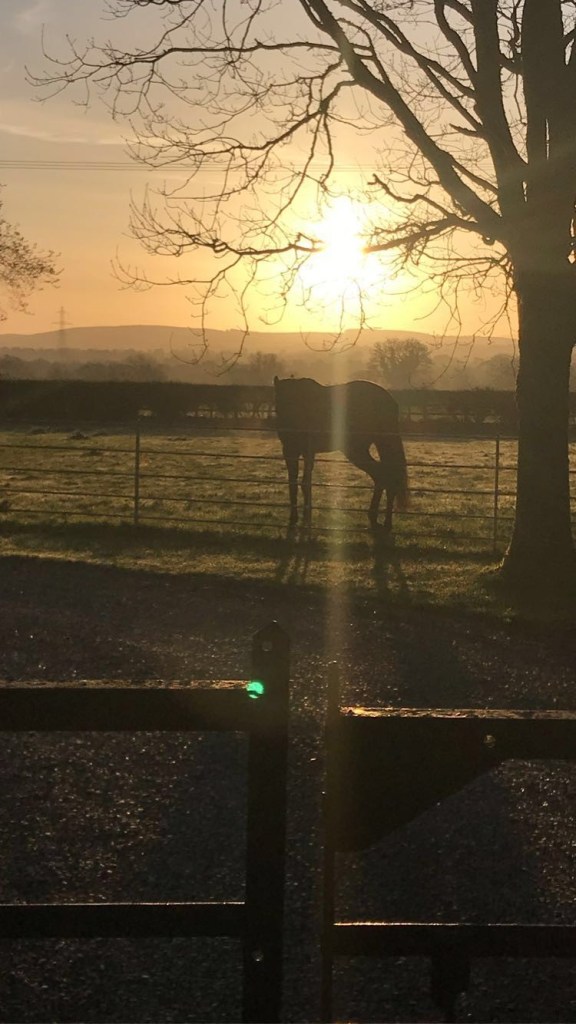
Horse racing is one of the oldest sports on the island of Ireland, records show that racing took place on the Curragh as far back as the 7th century. Through the centuries racing has had to change and adapt, this year was no exception. The industry has come up against immense pressure this year between Covid, a no deal Brexit and animosity from animal rights activists groups, there’s never a dull moment for the racing industry.
Whilst standing in the yard at Ross O’ Sullivan’s one can’t help but be enthralled by the sounds of majestic animals as they hurtle up the gallop and through the fog, it would give life to the weakest of souls. However, many people are of the opinion that the industry is outdated and the government has been faced with plenty of opposition in regards to the funding and subsidizing of the sport. Animal rights activists groups would argue that horse racing is ‘animal cruelty’ and should be banned outright. O’Sullivan argued that he “was all for animal welfare, but a lot of these people who are after gaining advice, maybe on social media, are probably not very well educated.” He insisted that horses are looked after better than most humans “ fed to the highest order, with nutritionists, a health regime that is second to none, rugged up and warm, diets completely dissected to understand them and vets on call 24hours a day, nothing left to chance.” He urged people to “spend a day in a racing yard.” The racing industry employs almost 30,000 people in the republic of Ireland both directly and indirectly. O’Sullivan employs 8 people at his yard in Kill, Co,Kildare.
Animal rights activists were the least of the worries this year. Covid -19 forced a 3 month shut down for the industry. While many industries struggled to reopen in the midst of the pandemic, horse racing managed to resume on the 7TH of June, albeit behind closed doors. Strict self regulation by the HRI meant that racing was able to go ahead; they implemented a zero tolerance approach to breaches of their guidelines. They didn’t show much mercy for the likes of Willie Mullins and Aiden O’Brien, they towed the line like everyone else and after they breached the guidelines were subsequently fined and banned from racing for a number of weeks. The rigorous protocols were undoubtedly the secret to their success in keeping the industry open.
Trainer and owner, Ross O’Sullivan had no issue adhering to the guidelines saying “there wasn’t a trainer in Ireland that disagreed with them, anything to get racing back going was essential, to keep the whole business going it was very important.” He praised Jennifer Pugh, Senior Medial Officer of the IHRB, for putting the guidelines together “they’re pretty straightforward they’re not very complicated and really no one should have had a problem with them because they were very simple to follow.” The health screening forms need to be filled out and completed the day before the race meeting, failure to do so means officials will deny access to the event.
Your message has been sent

O’Sullivan acknowledged that while the paperwork was ‘fairly simple’ there was a heavier work load for the trainers. Owners are not permitted to attend meetings “it still is disappointing that owners can’t go, they are the most important part, they pay the bills and it’s probably going on nine months now so really and truly they’ve been very patient.” Restrictions on owners attending meetings were lifted for a brief period but unfortunately locked down again. This has added pressure to O’Sullivan’s workload “ I do definitely feel that I have to get them more involved which involves race day videos, jockey videos after the races, all essential now to keep your owner updated and happy.” He admitted that the correspondents with owners were “going down very well, but they need to get back racing soon, it can’t last that they are not allowed go racing.” He hopes that by early 2021 Ireland will follow the lead of England and France who last week allowed the return of owners and spectators.
Most industries have suffered immense commercial damage in the wake of the Corona virus pandemic. The horse industry did not escape either, yearling sales were down forty percent in the last quarter of this year, but O’Sullivan doesn’t think that that had anything to do with the pandemic, “the yearling sales were down yes, with the lesser end, a lot of it could be down to overstocking, maybe breeders have to have a chat with themselves breeding off average mares that really and truly shouldn’t be in the system.” However he added that “the high end of the market was fine.” Last week in Goffs saw the sale of the eight year old mare ‘Apples Jade,’ who smashed records after being sold for a jaw dropping 530,000 at auction. The 11 time grade 1 winner was bought by Noel Moran trainer and breeder.
O’Sullivan, husband to retired jump jockey Katie Walsh, contributes the poor prices in yearling sales to oversaturated market “if the mares aren’t good enough then economically it doesn’t make sense to be going off and paying your stallion fee for four or five grand to your mare, all your vets fees and everything and then all of a sudden you’re getting back two grand. The onus is on the breeder that if it’s not paying to stop breeding with that mare.”
Justice for Dachser
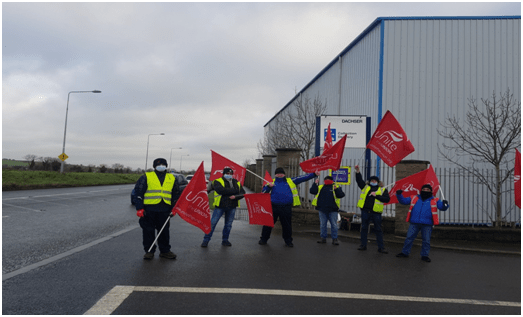
A German company, which has turned over 5.6 billion net in 2018, refuses to pay their employees a living wage. Flags have lined the picket fence in Rathcoole since Thursday as workers from Dachser Logistics continue to strike.
Jean O ‘Dowd is one of six regional officers from Unite the union in the Republic of Ireland and she represents just under 3000 members in her constituency. Her members have tried consistently since 2017 to engage with the Dachser but the company has refused. In July 2019the Labour Court gave a very strong recommendation that the company should work with Unite through the WRC and recognize that the employees are entitled to be represented by union of their choice. Dachser has completely ignored this labour court recommendation which Ms O’Dowd said is “very bad form.”
After the announcement of Strike action in September Dachser made a last ditch attempt to engage in negotiations. However, Ms O’ Dowd said that her members were less than satisfied, with what she described as a “ridiculous offer” of 1.5% increase in pay and no recognition of Unite as their union. “These lads are skilled Forklift workers, working constant nights, and earning 12.29 per hour, less than the living wage.” Dascher deals with supplying pharmaceuticals and chemicals, spills that are not always dealt with adequately, horrifying stories have been reported where “chemicals have been spilt in the warehouse and sand was thrown over it while the lads continued to the load the trucks.”
In a statement made to Kidare FM Dascher said that they have given a 12.5% pay increase in the last three years. Ms O’Dowd said “what they have actually done is changed the payment structure. They have taken overtime and shift allowance away and integrated that with the basic pay, taking away any overtime that was there means there is no addition to the member’s pockets at the end of the week.”
Patrick who was on the picket line in Rathcoole on Friday afternoon said that he was glad to be a member of Unite to have some “back up.” Patrick has been an employee at Dascher Logistics for 13 years and said the biggest pay increase he has seen in a year was 0.76%, which at 12.39 an hour would be just 9c.
Ms O’Dowd says they have spoken to the head office in Germany and in the Netherlands, their representatives have said they have put management teams in Ireland are not going to instruct them on how to run the business in Ireland. “The issue really boils down to legislation, in Germany, all of the Dachser employees are unionized and the unions are recognized, they all get pay rises every year and it is in their agreement, great working conditions, paid properly.” The problem in Ireland is that it’s not in our legislation so Dachser are taking the position that ‘if we don’t have to do it, we are not going to do it.’
Jean said the Dachser lads will pull the pickets off in a heartbeat if they go through the WRC give them the recognition and offer a substantial pay increase.
Learning in Lockdown.
Baking Bonanza.
Blueberry Banana Bread.
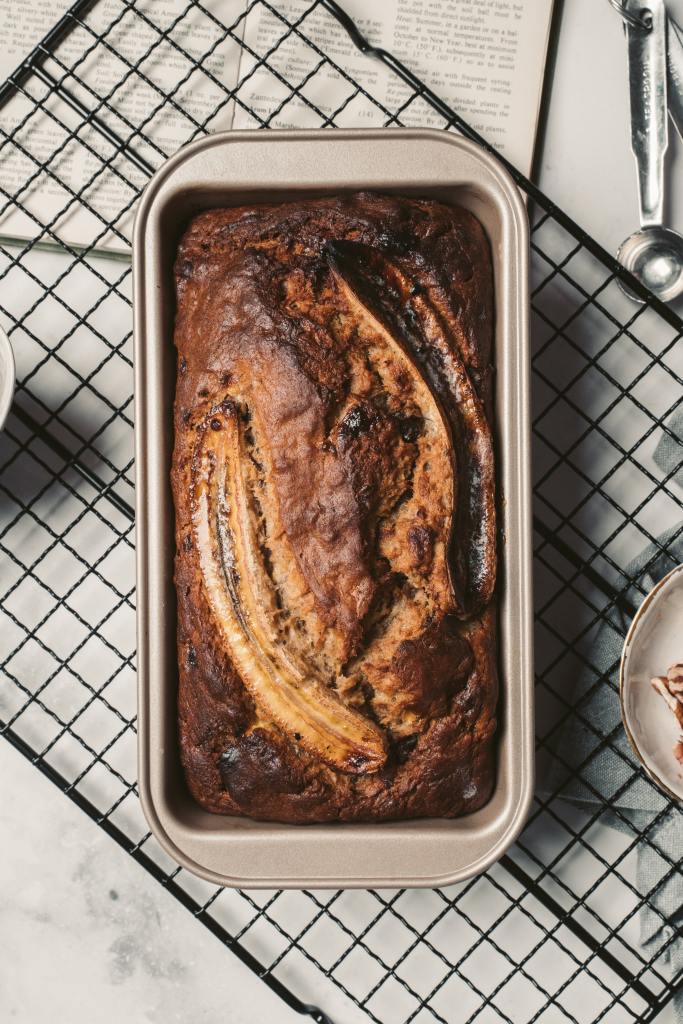
This is the simplest bread you will ever make.
Mix all the ingredients together in a bowl.
Bake for 70/80 Minutes at 180c.
Insert knife into the centre of the loaf and if it comes out almost dry- you’re good to go.
2 Bananas
250g Oats
75g Walnuts
2 teaspoons Baking Powder
3 Free range eggs
300g Greek Yoghurt
50g Blueberries
 The Harney Scoop.