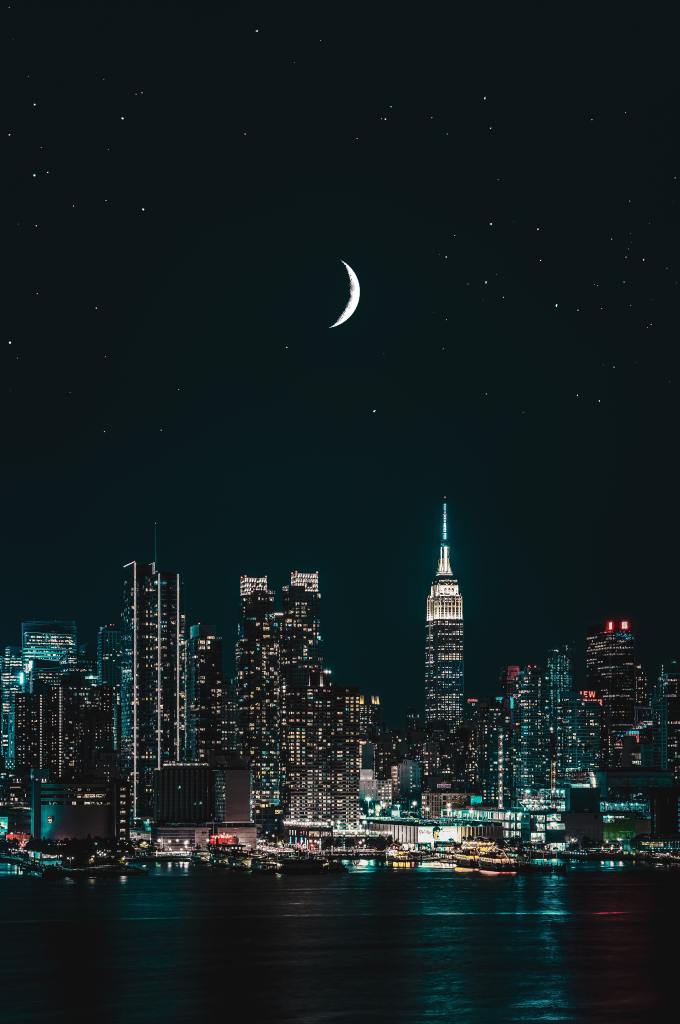
Five things you need to know before moving to New York.

  • There are Irish people everywhere. Irish pubs, restaurants, hairdressers, etc, the list goes on. If you are planning on moving away, take some time to research your local area. Make sure to join the local Facebook groups so that you can keep up to date with what is going on. Most neighbourhoods have Irish communities. The GAA is also a great way to meet new friends and mingle with people from home. Give football or hurling a try even if you have never played. Most people are there for the comradery rather than the sport itself.
  • The food is phenomenal. You might think that you have a broad palette when it comes to food- New York will knock that right out of you. There are so many fabulous restaurants in NYC thanks to the array of cultures living there.  From quaint Turkish breakfasts spots to underground Vietnamese restaurants, you will not find yourself stuck. Be sure to check as many of them as you can, undoubtedly, you will try foods you have never even heard of.
  • Like most immigrants in a foreign country, you might find yourself homesick from time to time. There is almost a common understanding or a shared experience of this between the immigrants in New York. People support each other and help one another through the hard times.
  • You will work HARD. You will work yourself to the bone and wear yourself thin in NY. At times you will have more money than you know what to do with. Splash out and live the lavish NYC lifestyle from time to time but tray and save some money. Especially if you are planning on returning to Ireland, it will be the easiest money you ever save.
  • Learn how to be alone. Even if you move over with friends or make friends in NY, the chances are they will probably work an opposite schedule to you – such is the NY way. Don’t let that stop you from exploring the city. Go to mid- week basketball games or an impromptu Broadway show. Don’t wait for someone to go with you, you might not get a second chance!

Habermas’ theory of the public sphere.

‘Alternative journalism online elicits an optimistic reappraisal of Habermas’ theory of the public sphere; a sphere where state and corporate authority is publically monitored through informed and critical discourse by citizens.’ 

 “If freedom of speech is taken away, then dumb and silent we may be led, like sheep to a slaughter.” George Washington.

The structural transformation of the public sphere has given rise to free speech and free press that guaranteed a space for public opinion. In the past we saw the ascension of the public sphere coincide with the emergence of liberal philosophical thought. However, Habermas’ public sphere was a bourgeois public sphere because it excluded the poor and the uneducated. It only made sense if you had the money to absorb or contribute to the sphere. Habermas believed that the principles of the public sphere form the indispensible basis for a free society. The emergence of the authoritarian state stifled the idea of free speech. At the same time the increasing size of corporations and the development of mass media meant that segregation appeared between the public and private sphere. Curran[1] states that, “The media ceased to be an agency of empowerment and rationality, and became a further means by which the public was sidelined. Instead of providing a conduit for rational-critical debate, the media manipulated mass opinion. It defined politics as a spectacle, offered pre-digested, convenience thinking and conditioned the public into the role of passive consumers.” Huge growth in advertising coerced editors into creating content for profit. Publishing companies became accountable to the whims of the stock market. Habermas argued that this had a pernicious effect on the public sphere’s ability to accommodate rational debate and questions of politics and morality came to be guided by economic interests.

Habermas[2] has hope for a public sphere and highlights it as the fundamental mechanism for democracy. Technological advancements mean that almost all walks of life across all social classes have access to the internet. If one is to look at the internet as the public sphere then it undoubtedly makes the playing field more accessible. Social media platforms such as Facebook, Twitter and Instagram have become the public sphere that Habermas had once only imagined.

Stevenson[3] argues that, “The state is best served by a depolitcised citizenry.” In one sense social media platforms create this kind of environment, they definitely face less regulation than that of the main stream mass media. It allows all citizens the opportunity and the ability to engage in society and express their views.  Nowadays, the public sphere has taken on a whole new lease of life. Undoubtedly, the internet can be accredited for this change. The biggest question Habermasian’s ask is of the internet and politics, is whether this new place acts as an effective public sphere or whether it divides and acts as an echo chamber that stifles effective and rational debate? The internet in theory should be the public sphere that Habermas had always imagined; it has fewer gate keepers and fewer agenda setters than traditional public discourse. The rise in popularity of social media platforms has led to the criticism of corporate authority and widely held ‘industry norms’ have become a thing of the past.

With this in mind, we need not look any further than the “Me Too” movement. The phrase was coined by a social activist and community organizer Tarana Burke in 2006. It was introduced to promote “empowerment through empathy” among women who experienced sexual abuse, particularly those who were of colour and belonged to the underprivileged communities. However the movement only really came to light in 2017 when it featured heavily across social media platforms after actor Alyssa Milano tweeted, “If you’ve been sexually harassed or assaulted write ‘me too’ as a reply to this tweet.” The actor woke up to thousands of replies and the hashtag ‘me too’ was trending number one on Twitter. Imagine over fifty thousand people trying to get their story of sexual harassment or abuse printed in newspapers on that day – it wouldn’t happen. However social media gave these survivors a global platform to air their stories at a velocity that would have shocked Habermas.

The case of Harvey Weinstein, cofounder of the Miramax production company and former film director, has now become a convicted sex offender after he got his comeuppance thanks to the success of the ‘me too’ movement. Weinstein was well known and highly regarded in the industry; his company had produced films such as The Crying Game (1992) and Pulp Fiction (1994). Unfortunately that wasn’t all Weinstein was known for, there is a long list of women who have accused Weinstein of sexual misconduct, including star studded actors like Angelina Jolie, Kate Beckinslae, Gwyneth Paltrow and Cara Delevinge. Justice was served in January 2020 when Weinstein was charged with four counts of rape and sexual battery. In this case justice was ultimately served by the public and by the people that wrote about their experiences on social media. This is just one example of the power of social media and the sheer force behind the platforms. It demonstrates the good that social media can be used for, when it acts as a positive public sphere. It validates the need for public relations at a global level between groups of people who share the same experiences and interests.

Curran[4] argues that the public sphere, “should empower people by enabling them to explore where their interest lies; it should foster sectional solidarities and assist the functioning of organizations necessary for the effective representation of collective interests; it should sustain vigilant scrutiny of government and centres of power; it should provide a source of protection and redress for weak and unorganized interests.” There is no doubt that alternative journalism such as social media platforms and citizen journalism has changed the way we think and engage within the public sphere. Although the internet has been great in many respects, alternative journalism has also contributed to certain negative movements. On the contrary to the ‘me too’, a different strand of that movement has appeared the ‘cancel culture’. The ‘cancel culture’ is when the public (the internet) disagrees with the opinion usually of a well known person or celebrity and decide that they are now ‘cancelled’, making it hard for them to find new work or get new roles in films. J.K. Rowling the world renowned author of the Harry Potter books was one of the many celebrities to fall victim to cancel culture. Rowling tweeted in support of Maya Forstater who is a vocal TERF- Tran exclusionary radical feminist and a supporter of a transphobic political movement arguing that transgender women are men. The Trans community hit back at Rowling and caused her to lose many followers online. Rowling responded by writing an open letter to the public which managed to gain 150 signatures supporting her view. Albeit it disappointing for the Harry Potter fans that identify as transgender, can cancelling a person be justified just because they have a different view or opinion than our own? This is the problem with the internet and the platform it provides for alternative journalism; it can become an echo chamber of irrational thought and ignorance. If one is to cancel anyone and everyone that has a differing opinion to our own, then essentially everyone will end up cancelled by one group or another. Habermas[5] had feared that the internet had its limitations for expanding the public sphere; it may not be the ideal social space for the public sphere as it polarizes and limits rational discussion.

Political discussion and debate online still coalesces around the press and the central narratives are created by offline traditional media. Garnham[6] argues that, “For Habermas the public sphere and the concept of a rational politics that goes with it, is based upon the assumption, which seems to me wholly unrealistic, that all participants possess complete information and engage in all debates.” Another pitfall of alternative journalism and the online media platforms is that it gives propaganda a suitable environment to thrive and grow. With this in mind, one only needs to look at Trump era of presidency. Donald Trump and his use of social media platforms to spread misinformation seemed at one stage almost unstoppable. Throughout his years in office he continued to undermine the hard work of ethical journalists and constantly accused them of spreading ‘fake news.’ Kellner[7] discusses Habermas’ view, “Not only does Habermas limit democracy to the sphere of discussion within the lifeworld and civil society; he omits the arguably necessary presuppositions for democratic deliberation and argumentation—an informed and intellectually competent citizenry.” Up until recently we have not seen much competent citizenry, rather we saw misinformed followers of what could be described as a dictator. Regrettably, Trump’s use of social media, especially Twitter, has been detrimental to society as a whole. Trump’s allegations of ‘widespread voter fraud’ led to civil unrest in the United States. On January 6th 2021, Trump, with the use of Twitter, ordered an attack on the Capitol to ‘stop the steal’ of what he claimed was a stolen election. An angry mob of Trump supporters stormed the Capitol and lit a fire at the front of the building. Trump was subsequently banned from Twitter after inciting such violence. However this demonstrates the dangers of social media and unregulated alternative journalism. Unfortunately, the idea that a modern public sphere can exist is just that- idealistic.

 In reality the modern public sphere consists of large groups of people of one opinion or another, both with little regard for what the other has to say. Garnham[8] states that, “public policy should, if democracy is to be taken seriously, favour citizen participation in such debate. If that is the case debate must include as many of the existing public views in a society on the relevant issues as possible.” Nowadays social media platforms rely just as heavily on advertising as traditional mass media and thus the problem arises. Notably, it could be argued that alternative journalism is just as influenced by advertising than the traditional journalism. Increased data collection agencies, cookies, and algorithms mean that as citizen journalists we are hugely influenced by the data those social media platforms supply to us. For example, if you support Donald Trump and you follow mostly republican pages online then you will be prompted to watch similar videos and read similar articles that relate to the opinions that you already have. Similarly if you support the democratic side of the debate your social media feeds will prompt an influx of likeminded material.

In conclusion, alternative journalism does elicit an optimistic reappraisal of Habermas’ public sphere in some cases. It is true that state and corporate authority are closely monitored by the public. However, it cannot be said that those that monitor this authority are well informed through critical discourse. Instead alternative journalism and online citizen journalism are often times an echo chamber of information, much of which is not verifiably true. The modern public sphere is now social media and the internet, and it is a far cry from the egalitarian and rational discourse that Habermas had once imagined.


Vaccine Nationalism.

The wealthier countries have hoarded enough doses to vaccinate their entire populations nearly three times over

A research report undertaken by Oxfam showed that vaccinating the poorest half the world against Covid-19 would cost less than four months profit from Big Pharma. An Alliance of campaigning organizations including Oxfam, Amnesty International, Frontline AIDS, and Global Justice Now, warn that the majority of people living in low income countries will not have access to a vaccine until 2023/2024 if action is not taken by global governments to roll out a people’s vaccine.

The call of the Alliance is for a People’s Vaccine, a vaccine that’s patent free, a mandatory worldwide sharing of all related knowledge and intellectual property. Caroline Reid from Oxfam Ireland said , “There should be a commitment to transfer the technology and to ramp up and build capacity to produce the vaccine, it should be provided at a transparent cost price without profit; it should be available to all, frontline workers from Dublin to nurses in Delhi.” 

The pandemic has had disproportionately impacted the economy of third world countries leaving billions of people being at risk of being pushed into hunger and poverty. People in third world countries fear that they might die from starvation before they die from Covid, many of whom have been laid off as result of shutdowns across the western world. Caroline Reid said that it is important for people to be aware that, “these are the people that make the clothes that we buy on Henry Street or Grafton Street here, so when Covid first hit those workers were basically told to go home.” The shutdowns have led to the cancellation of production and a halt in supply to retailers which has had a knock effect for these workers. She added “They don’t have welfare systems like we have in Ireland.”

Caroline Reid said, “Pharma is an industry that does generate a lot of income, this is a global pandemic it’s unprecedented times and unprecedented response is needed.” However, Michael Mc Carthy of Oxfam added that “It is ultimately not up to us to persuade private actors to change, it’s the role of government to regulate how they operate for the common good.”

Michael D Higgins has pledged his support for the alliance saying that “Solidarity within and between countries and the private sector is essential if we are to overcome the challenges presented to us by Covid with regard to accessing appropriate medical treatment.”

To date all of Moderna’s doses and 96% of Pfizer/BioNtech doses have been acquired by wealthier countries. The people behind Oxford Astra have pledged to provide 64% of their doses to people in developing nations. They are likely to only reach 18% of the world’s population by next year at most. This demonstrates that one company alone could not vaccinate the world, signifying why unity on this issue is vital.

Caroline added, “We have seen in countries across Europe, this virus has crippled some of the most advanced health care systems in the world. So for countries with already struggling health systems that haven’t had the resources to invest in health services, the situation is really bad and unnecessary lives are being lost.”

To date forty countries have pledged their support for the Covid technology access pool, an initiative similar to the Alliance, that was set up by WHO (World Health Organisation.)

Friends.

Whether you love it or you hate it Friends has played a major role in the lives of millennials.

I for one have spent copious amounts of hours watching and listening to friends. Listening you say? I have become so au fait with the show that I can leave the television playing in one room and with the volume up I can hear everything whilst simultaneously make dinner and see that episode play out in my head. It is almost as enjoyable as watching it. Friends, for me, has become a comfort and a safety blanket. It is the show that I watch when I am happy and sad it lifts my spirits even on the darkest days.

I have always thought it was a great feel good sit- com. However, recently I have come to appreciate it even more. The idea that six friends could meet up almost daily in their 20’s and 30’s is idealistic, to say the least. That is one of the saddest parts about leaving school and college. It is the sense comradery.

Friends allows us to imagine a world where we see our friends all the time. Where we hang out everyday after work and drink coffee. In reality, most of us don’t see out friends all that often. Many of my friends have emigrated and I haven’t seen them in person for years. We have to stay in touch via WhatsApp and Zoom calls. Some of my friends have children- so when the kids come the fun is undone- just kidding. All joking aside, as you get older the dynamic shifts in a friend group. Some go one way and others another. Some might emigrate, some never leave their hometown. Some have kids and some become career driven.  The group moves on and things change. Watching Friends lets us imagine a life where we all hang out as adults, just like we never left school.

A comparison between the Swedish Welfare state and the Irish welfare state, discussing the impact each has on the demography of families.

Introduction.

This essay will attempt to adequately compare the democratic welfare state of Sweden and the liberal welfare state of Ireland. The essay will hopefully bring the reader to a better understanding of each welfare state, after which one should be able to draw their own conclusions as to the way in each state is operated. It will draw on different aspects and influences of both welfare states, discussing in particular its effects on the demography of families.

Results.

The following results are taken from the findings in the OECD report. It showed that Ireland’s female employment rate in 2009 was slightly lower than the
average. Only 57.8% of women were in employment compared to an OECD
average of 59.6%. In comparison, Sweden had one of the highest rates of female employment in the OECD with 70.2% of women in work. Although there had been a minor decrease in female employment,over a period of ten years between 1999 and 2009.

The Irish fertility rate in 2009 was at 2.07 children per woman extremely close to the rate
that guarantees the replacement of the population, and well above the OECD
average of 1.74. Sweden’s fertility rate is also one of the highest of OECD countries. In Sweden 1.94children are born per woman.

In Ireland, 16.3% of children live in poverty, which is well above the OECD
average of 12.7%.Swedish child poverty rates are low. Sweden’s child poverty rate is just 7%
compared to an OECD average of 12.7%. Based on employment rates an
increase as high as 3% points is predicted.

Sweden has the smallest average household size in the OECD. With fewer than2 people (1.99) per household, it is well below the OECD average of 2.63.Irish households are larger than in the OECD on average, with 2.85 persons perhousehold.

According to thereport, Ireland spent 2.6% of GDP on families in 2007, which is above the OECD averageat 2.2%. However, only 0.4% was spent on childcare services. Sweden on the other hand spent $63 100 per child aged 0-5 on average in 2007, which is well
above the OECD average at $36 000, and fourth highest in the OECD.

www.oecd.org/social/family/doingbetter

Discussion.

When talking about the liberal welfare regime that exists in Ireland, it is also important to remember to look at British welfare state. Though Ireland is a republic and is not part of the United Kingdom it was under British rule, until it gained independence in 1922. So naturally there are many correlations in their welfare systems.

It is true that in most cases parenthood greatly alters the life of mothers and fathers alike. Leisure time is replaced by extra housework and childcare. Unfortunately this change has much more of an impact for the mother,

‘The extent of change is, however, greater for most mothers, who typically interrupt or drastically reduce their employment’.
                                                                                                                        (Paull, 2008)

This unemployment often comes with damaging consequences for the career and income of women.

We can see this connection when we look at the statistics of female employment in Ireland, with only 57.8% of women working under this liberal welfare regime. However there is a huge difference when we take a look at the findings from the Swedish democratic welfare state, with 70.2% of the female population working.

There are many reasons for these huge differences between Sweden and Ireland’s female employment rate. For instance the fact that the Irish state only spent 0.4% on childcare in 2007 is a major setback for female employment. In many cases it would not be feasible for the Irish women to work as it would not make sense financially. Unsubsidised childcare means expensive childcare bills, resulting in women staying at home rather than working. However, Sweden’s welfare state spends €63 100 per child age (0-5)within this providing subsidised childcare, which assists women in re-joining the workforce after they have had children.

The share of gainfully employed women differs from one country to another, as does the degree to which women are integrated in the labour market’

 (Daly, 2005)

The Irish welfare state in the past has had a distinct symbiotic mutually inter- dependent relationship with the Catholic Church. The Irish welfare state as ‘Catholic corporatist’ (Cochrane and Clarke 1993), this description that owes much to the role of the Catholic Church. The Church–state conflict in social policy and the persistent adherence of the population to Catholic moral norms and religious practice went on well in to the 1980s and is still quite prevalent today.

‘The main contending force is not the trade unions or organised capital but the Catholic Church.’

                                                                                                                        (Peillon, 2001)

Furthermore when we examine the fertility rates in Ireland, which is the top in the OECD countries, we have to accept that the Catholic Church has had some bearing over these statistics. There are numerous reasons for this assumption. One being that abortion was only made legal after a referendum in 2018.  While abortion is no legal, the stigma around it still exists, this causes an influx to the birth rate.

In Sweden, the birth rate is still higher than the OECD average at 1.94 per woman. However there are different contributing factors to the above average fertility rate in Sweden. Sweden has a very good system in regards to family policy. The appeal of the time given for Parental leave is a contributing factor in having a child,

‘Work-family reconciliation policies have been adopted to address a range of issues, such as
low fertility and employment rates, not only as a concern for gender equality
.’

(Lewis, 2006)

So we can conclude from the above comparisons that although both Ireland and Sweden have high fertility rates in comparison to the OECD average, the contributing factors to these rates are drastically different.

Low Income Families Suffer Most.

The hard border and a fall out from Brexit may be too hard a fall for low income families.  

Social Justice Ireland is a non-profit organization that advocates for equality and justice for all members of society. They focus on policy reform, on issues related to poverty, inequality, social exclusion and sustainability. This year they are giving special priority to the issues surrounding Brexit and the impact it will have on the poorest in society.

The prospect of a hard-Brexit has been overshadowed by the threat of Covid-19 in recent months. However, the potential for sudden and significant changes in economic activity and living standards from January 1st 2021 remains a major concern to low income families. Last year saw increased employment and high rates of economic growth, despite this there are still 637,000 people living in poverty in Ireland, 193,600 are children under the age of 18.

Michelle Murphy, Research Policy Analyst at Social Justice Ireland, expressed concern over the failure by Government to increase social welfare rates in the Budget 2021 saying “for two years in a row now we haven’t seen an increase in welfare rates.” Ms. Murphy is also worried about the lack of discussion around Brexit and the impact it will have on low income families, adding “they do not feature in any of the Brexit discussions, nor do they feature in the government Brexit fund itself.” 

 An ESRI report, from March 2018, highlighted the dependence of the Irish consumers on imports from other states. In particular, it noted the concentration of UK imports on household expenditure in areas such as food. Tariffs on foods coming in from the United Kingdom and the failure by Government to increase core social welfare rates in Budget 2021 means that “low income families will be disproportionately impacted by the increase in the price of food, which is going to come after January.” Ms. Murphy added that “the poorest 30 percent of the population spend 20 percent of their disposable income on food every week, the rest on transport, accommodation and energy bills. If you see a rise in the cost of food it’s going be very difficult for this cohort to absorb that increase.” The ESRI found that consumer prices would rise by between 2% and 3.1% and this would raise the cost of living for the average Irish households by between €892 and €1,360 a year.

 Ms. Murphy said “despite four years of successive economic growth and high employment rates, well in advance of the impact of covid, we are nowhere near reaching the 2020 child poverty target or the national poverty target that was set back in 2010.” Social Justice Ireland welcomed the commitment to the living wage within the programme for Government, yet it still begged the question, “Why is child poverty not a political priority?”

Ms. Murphy was adamant that in order for the public to really help those who are vulnerable they needed to “make poverty a priority for themselves and put pressure on local elected representatives.” In the run up to Christmas, she urged people to shop local and donate to charities such as SVP.

A Tale of Two Cities.

Sex and the City – The reality.

My time in college was spent lying in bed with the girls, hung-over and binge-watching Sex and the City.

We wished our days away dreaming of the bright lights of New York City. We often dreamt that we were in Manhattan dressed to nines, dancing in roof top bars and sipping cocktails. I fancied myself as a bit of a Carrie, as an aspiring writer/journalist, I could picture myself living in a fabulous West Village apartment. I would have the clothes, the shoes and the friends to go along with it.

Roll on a few years, my friend and I had graduated from the University of Limerick and we decided that we would set sail across the Atlantic to live the American dream. We were after all ‘too big’ for small town Ireland that we were leaving behind, or so we thought.

I remember the day we landed in New York- bright eyed a bushy tailed. Completely naïve to the world that we were about to enter. Sally and I had lived together in college, so we were not worried about moving to New York together let alone living together. We did not heed the warnings from our friends and family, “you know what they say, if you want to know someone go and live with someone.” We went against the grain; we found a two-bedroom apartment in Queens, we decided to share a room to save money and rent the second room to another Irish girl. What could go wrong?

Before long, the two college friends who had once slept in each other’s bed every night of the week were sharing a room and barely speaking. You see, it is one thing to choose to spend every waking moment together; it’s another to have no choice but to spend every moment together. In college we had our own rooms to go to and now we had only our beds. To make matters worse we started working in the same Irish bar. Working and living together was not our smartest idea.

We worked long hours and our schedules meant we were like ships in the night, we barely saw each other. Sally wanted to get a job in something related to fashion and design. I wanted to write for a newspaper or at the very least something media related. However, we quickly found out that these jobs were not easy to come by. They usually came in the form of internships for little or no pay. So, we worked in bars where the money was good, and the hours were terrible- because we had rent to pay. Our American dream seemed to slip further from our hands into a cold reality.  Our friendship survived- some friends are more like family.

Sex and the City portray New York to be this wonderful place where you see all your friends all the time and where money comes easier than air. And Yes, New York is that but what they fail to mention is that you work VERY hard for everything you have. When I first moved to New York I was shocked by the crazy people, by the crass and callous manner that most people possess. The pushing and shoving that you endure on the subway and in the streets. People walk at a hundred miles per hour and homeless people harass you for money.

It didn’t take long for me to realize that New York is not exactly what you see in the movies. I mean, yes, it is busy, crazy and wild but if you are not careful New York will swallow you up and spit you out. NYC is not just glitz and glamour you see in Sex and the City, it is hard work and hustle.

Who holds the power within cohabiting and married heterosexual couples? Gender inequalities when it comes to power and the division of housework.

When I started researching for my paper I initially decided that I would research on power between couples alone. However after many hours of reading countless journal articles a different question became apparent. When a woman holds equal or more power in a relationship, what are the consequences?

Resource theory of power conceptualizes marriage as a set of exchange of relations in which the balance of power rests with the partner who contributes most resources to the marriage.        

                                                                                       (Ferree, 1990, in Volger 2008)

Partners with a larger income are more likely to play a dominant role in decision making (Blood and Woolfe 1960, in Volger 2008). They came to the conclusion that as wives gained access to paid employment they also gained access to more power within the relationship. Interestingly enough I found similar findings when I conducted my interview. The interviewee was a 56 year old male, due to financial circumstances his wife had recently become the breadwinner. He said when he had been the breadwinner that he felt he “held the upper hand” when it came to decision making.  However he said now that his wife is the breadwinner she “runs the show”.

Volger discusses in her article how marriage ‘should’ be based on equal sharing. Ideally all money within the marriage should be shared equally regardless of who contributes most. Unfortunately such an egalitarian attitude is rare, research shows that there is a sense that individuals ‘own’ what they earn. The money that they make is ‘theirs’ and they have a right to do what they like with it (Volger 2008, p.690). In the case of my interviewee the above was definitely true. He explained how if he needed money for something as simple as petrol, asking his wife was always a “huge ordeal”.

Volger’s article highlights this problem stating that ‘breadwinners feel they have legitimate right to power’ and they use this when it comes to money and decision making.  This legitimate right to power can have a dramatic impact on the relationship, as the interviewee himself said his wife’s breadwinner role had put “a huge amount of stress” on his marriage. Felmlee also talks about the ‘repercussions of gender imbalances’ and how the balance of power in romantic relationships could very well influence its durability (Felmlee 1994, p276).

Power can be described as having the ability to control or influence people. As we have already seen, when it comes to relationships the person who holds the most power usually earns the most money. Furthermore when it comes to a shift in power between couples what does this mean for the delegating of housework and child rearing? I will investigate this topic, keeping in mind the ever growing amount of women who are in paid employment, many of whom are the main breadwinners in their household. When we think about a traditional household we think of the male breadwinner, the wife or partner staying home to take care of the children and look after household chores.

Nowadays there are many women who are wives and partners that are also in paid employment. The glory days of the male breadwinner seem to be rapidly coming to a halt. However the notion of the domesticated woman is not. From reading Hochschild’s article and her views on the working mother I believe my argument is ever more poignant. The study conducted interviewed both men and women who worked an average of 35 hours week or more. Hochschild’s found that women on average were predominantly in charge of looking after the household chores after they finished their day job. These chores which included tending to the children’s needs, cooking and cleaning were all part of what Hochschild labelled the ‘second shift’. When the time spent at these chores were added up women worked ‘roughly 15 hours longer each week than men’ (Hochschild 1989, p.259).

These findings were further supported my interviewee, who although now earned less than his wife and relatively the same hours, did not take on any responsibility for household chores or child rearing. ‘Distribution of household labour is gendered in the same way that paid work is gendered’ (Walker 1996, p813). When I asked the interviewee did he feel he should have to contribute in household chores he said “not really, she looks after inside and I look after outside”. Nonetheless it is worth keeping in mind that the lawn needs to be cut once a week and on a seasonal basis, the dinner however needs to be cooked every day.

So how is it that these female breadwinners who have gained power by financial liberation in the home, are still slaves to the ‘second shift’? Walker argues in her article that the ‘less desirable tasks are performed by women and status has a way of reducing men’s but not women’s participation in these tasks’ (Walker 1996, p813). Unfortunately it seems that this is indeed the case for the majority of women. Regardless of working equal amounts of hours or making more money than their spouses, women carry out nearly all of the required housework. The real issue is that the so called ‘power’ working women have is irrelevant. There is no power gained for the working woman when she is expected to work essentially two jobs. The power is lost to her general health and well-being as wasunveiled in an interview of 1000 men, women and people. The results showed that working mothers were ‘more likely than any other group to be anxious’ (Throits1985, inHochschild p259) also reporting hallucinations and high stress levels.

The findings in relation to women, power and the division of housework are appalling especially for this day in age, yet many people will agree the results aren’t entirely surprising.  The article by Alexis J. Walker ‘Gender, power and the remote control’ was another eye opener to the ever the dominant role the male plays within the home. Walker found that heterosexual men generally dominated the remote control device (RCD) and program selection when watching television with their partner. When their spouses were interviewed in relation to the their RCD use only 30% said they would like to change the men’s behaviour( Walker 1996, p820). These results show a disappointing but realistic view of resignation to the way things are reaffirming the evidence of hidden power than men posess.

In conclusionto this paper I think that it is suffice to say that a woman’s status in the workplace, has very little bearing over the status or power she has at home. Nonetheless the working mother may be seen to the wider public as more egalitarian than the housewife. However from the findings such equality generally does not exist. The working mother works two shifts, one in the office and another when she gets home. The second shift at home is carried at alone with little or no help from her partner or husband despite the couple working the same amount of hours outside the home. Does the working women have power, perhaps in financial contribution? Yet this ‘power’ is suppressed by the ever suppressing role that the woman must do gender, acting in ways consistent to social structures.

Sweden’s Iconic Band – Roxette

There isn’t a person who lived through the 80’s and doesn’t know Roxette. This band is a Swedish pop rock duo, consisting of Marie Fredriksson (vocals) and Per Gessle (vocals and guitar). The duo was formed in 1986, five years after Abba’s final album in 1981. The duo became an international act in the late 1980s, when they released their breakthrough album Look Sharp!Their third album Joyride, which was released in 1991, became just as successful as its predecessor. Roxette had four US number-ones with “The Look“, “Listen to Your Heart“, “It Must Have Been Love“, and “Joyride“.

 Johansson claims in his article that Abba created a role model for other Swedish artists to follow. I can see where Johansson draws this conclusion, after all Roxette was formed a mere five years after Abba’s album. The niche for a new Swedish pop sensation was certainly there.

However, before coming together to form the duo, Fredriksson and Gessle were already established artists in Sweden. Fredrikssonhad released a number of solo albums and Gessle was the lead singer and songwriter of GylleneTider, which had three No. 1 albums. On the advice of the managing director of their record label, they came together to record “Neverending Love“, which became a hit single in Sweden.Furthermore while Fredriksson and Gessle were already music artists in Sweden they had were not internationally known. Perhaps the success of Abba encouraged them to pursue a wider international market.

However, another reason that Roxette reached international fame could be that the Swedish state provides a generous amount of music related support. Approximately 30% of children attended publically subsidised music education after school hours. Going on these figures that would give children a great musical boost from a young age. When you add that to the fact that Swedish adult education associations offer rehearsal spaces, musical equipment, workshops and concert opportunities when bands are formed. Taking all these facts into consideration one can only wonder how there aren’t more Swedish bands, given the fabulous facilities and amenities people have at their disposal.

Don’t Bore Us, Get to the Chorusbecame agreatest hits record.Roxettetook a hiatus during the mid-1990s withHave a Nice Day (1999) and Room Service (2001). They continued to chart mainly in Europe and Latin America, where they earned various Gold and Platinum awards until the beginning of the new millennium.

Gessle went on to release solo albums and reunited with GylleneTider.Roxette took to the stage together again for the first time in 8 years, in 2009. In 2011, they released Charm School, their first studio album in ten years. It is my opinion that Roxette’s fame is partially due to their perfect english, almost as if it is their native tongue. It makes their songs much easier to listen to as they flow perfectly.

Their songs “It Must Have Been Love” and “Listen to Your Heart” continue to receive worldwide radio airplay, They have sold an estimated 60 million records ,with over 10 million in certified units from Germany, the US and the UK.