Horse racing is one of the oldest sports on the island of Ireland, records show that racing took place on the Curragh as far back as the 7th century. Through the centuries racing has had to change and adapt, this year was no exception. The industry has come up against immense pressure this year between Covid, a no deal Brexit and animosity from animal rights activists groups, there’s never a dull moment for the racing industry.
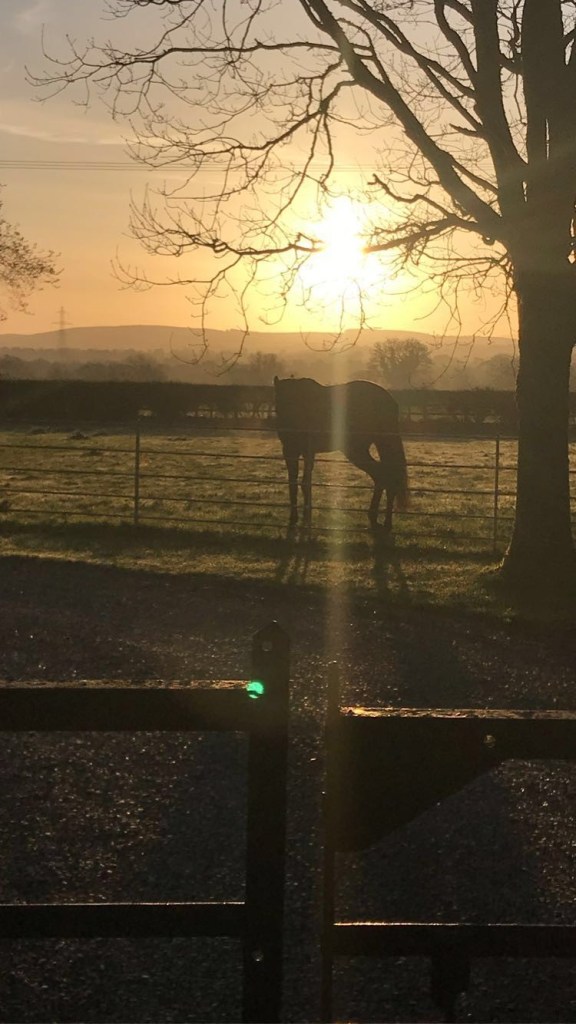
Whilst standing in the yard at Ross O’ Sullivan’s one can’t help but be enthralled by the sounds of majestic animals as they hurtle up the gallop and through the fog, it would give life to the weakest of souls. However, many people are of the opinion that the industry is outdated and the government has been faced with plenty of opposition in regards to the funding and subsidizing of the sport. Animal rights activists groups would argue that horse racing is ‘animal cruelty’ and should be banned outright. O’Sullivan argued that he “was all for animal welfare, but a lot of these people who are after gaining advice, maybe on social media, are probably not very well educated.” He insisted that horses are looked after better than most humans “ fed to the highest order, with nutritionists, a health regime that is second to none, rugged up and warm, diets completely dissected to understand them and vets on call 24hours a day, nothing left to chance.” He urged people to “spend a day in a racing yard.” The racing industry employs almost 30,000 people in the republic of Ireland both directly and indirectly. O’Sullivan employs 8 people at his yard in Kill, Co,Kildare.
Animal rights activists were the least of the worries this year. Covid -19 forced a 3 month shut down for the industry. While many industries struggled to reopen in the midst of the pandemic, horse racing managed to resume on the 7TH of June, albeit behind closed doors. Strict self regulation by the HRI meant that racing was able to go ahead; they implemented a zero tolerance approach to breaches of their guidelines. They didn’t show much mercy for the likes of Willie Mullins and Aiden O’Brien, they towed the line like everyone else and after they breached the guidelines were subsequently fined and banned from racing for a number of weeks. The rigorous protocols were undoubtedly the secret to their success in keeping the industry open.
Trainer and owner, Ross O’Sullivan had no issue adhering to the guidelines saying “there wasn’t a trainer in Ireland that disagreed with them, anything to get racing back going was essential, to keep the whole business going it was very important.” He praised Jennifer Pugh, Senior Medial Officer of the IHRB, for putting the guidelines together “they’re pretty straightforward they’re not very complicated and really no one should have had a problem with them because they were very simple to follow.” The health screening forms need to be filled out and completed the day before the race meeting, failure to do so means officials will deny access to the event.
Your message has been sent

O’Sullivan acknowledged that while the paperwork was ‘fairly simple’ there was a heavier work load for the trainers. Owners are not permitted to attend meetings “it still is disappointing that owners can’t go, they are the most important part, they pay the bills and it’s probably going on nine months now so really and truly they’ve been very patient.” Restrictions on owners attending meetings were lifted for a brief period but unfortunately locked down again. This has added pressure to O’Sullivan’s workload “ I do definitely feel that I have to get them more involved which involves race day videos, jockey videos after the races, all essential now to keep your owner updated and happy.” He admitted that the correspondents with owners were “going down very well, but they need to get back racing soon, it can’t last that they are not allowed go racing.” He hopes that by early 2021 Ireland will follow the lead of England and France who last week allowed the return of owners and spectators.
Most industries have suffered immense commercial damage in the wake of the Corona virus pandemic. The horse industry did not escape either, yearling sales were down forty percent in the last quarter of this year, but O’Sullivan doesn’t think that that had anything to do with the pandemic, “the yearling sales were down yes, with the lesser end, a lot of it could be down to overstocking, maybe breeders have to have a chat with themselves breeding off average mares that really and truly shouldn’t be in the system.” However he added that “the high end of the market was fine.” Last week in Goffs saw the sale of the eight year old mare ‘Apples Jade,’ who smashed records after being sold for a jaw dropping 530,000 at auction. The 11 time grade 1 winner was bought by Noel Moran trainer and breeder.
O’Sullivan, husband to retired jump jockey Katie Walsh, contributes the poor prices in yearling sales to oversaturated market “if the mares aren’t good enough then economically it doesn’t make sense to be going off and paying your stallion fee for four or five grand to your mare, all your vets fees and everything and then all of a sudden you’re getting back two grand. The onus is on the breeder that if it’s not paying to stop breeding with that mare.”

 The Harney Scoop.